
A post can get attention on X without immediately producing a website visit, signup, or sale.
That does not mean the attention is worthless. It means the person may need a better next step.
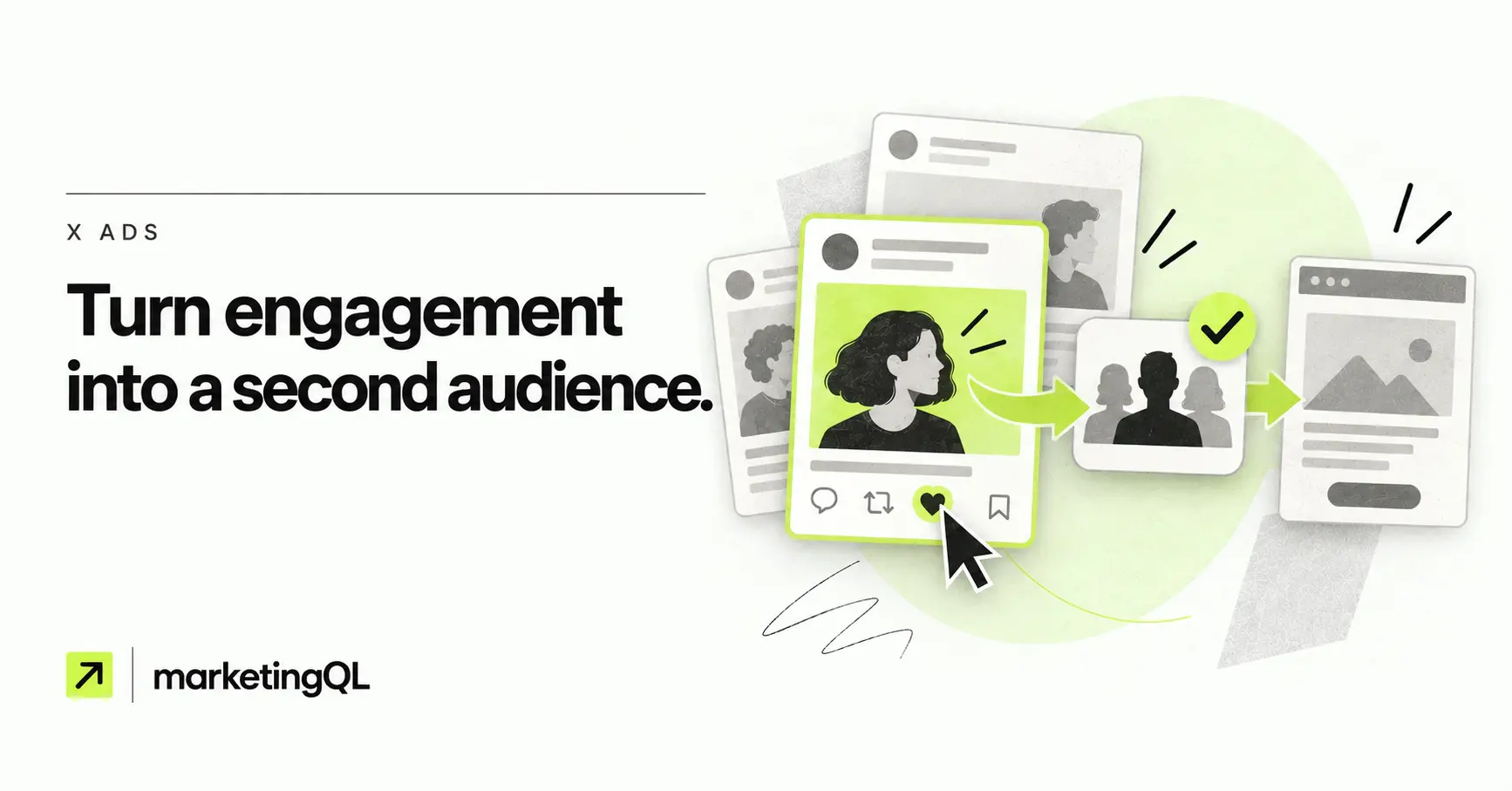
X Ads includes post-engager targeting, which lets advertisers build audiences based on people who viewed or engaged with organic and promoted posts. You can then reach those people again with a different campaign and message.
I think this is one of the more useful X Ads features for advertisers producing regular organic content. Instead of asking every post to generate a conversion immediately, you can use the first interaction to identify a warmer audience and follow up with something more direct.
Engagement should be a signal, not the final result
Likes, reposts, profile visits, video views, and other interactions tell you that someone noticed the content.
They do not tell you whether that person became a qualified lead or customer.
That distinction matters when reviewing an engagement campaign. A low cost per engagement may look impressive, but it is still measuring an interaction inside X.
Post-engager targeting gives you a way to test whether those interactions have value beyond the original post.
The first campaign earns attention. The second campaign asks the audience to take a more meaningful action.
X supports more than likes and reposts
X says post-engager targeting can use activity from organic or promoted posts, including:
- Impressions
- Likes and reposts
- Video views
- Post detail views
- Image expansions
- Link and hashtag clicks
- Profile clicks
- Post shares
- Poll clicks
Video audiences can also be segmented based on different viewing behaviors, including people who started a video or watched 50% or 100% of it. X’s post-engager targeting documentation
That gives advertisers plenty of options, but I would not put every available signal into one audience automatically.
Someone who received an impression is different from someone who watched an entire video, opened an image, visited the profile, or clicked a link.
The targeting should reflect that difference.
Start with two audience groups
A good starting place is to separate exposure from stronger engagement.
Group one: people who saw the content
This audience includes people who received an organic or promoted impression.
It will usually be the larger audience, but it is also the weaker signal. Some people may barely remember seeing the post.
I would use a simple message that reinforces the original idea and introduces the next step without assuming the person already knows the product well.
Group two: people who actively engaged
This audience can include people who clicked, expanded, watched, liked, reposted, shared, or visited the profile.
These actions require more effort than an impression, so the follow-up can be more direct.
For example, if the original post explained a customer problem, the second campaign could send people to a relevant product page, guide, case study, webinar, or demo flow.
The message should continue the same conversation instead of suddenly switching to an unrelated offer.
Use a specific post when the topic matters
There is an important setup detail here.
X says that if you want to retarget people from one specific post, the original campaign should contain only that post. You can then choose posts from specific campaigns while building the retargeting audience. X’s setup instructions
That is worth planning before launching the first campaign.
If several unrelated posts are grouped into the same campaign, the resulting audience may combine people who responded to very different messages. That makes it harder to build a relevant follow-up.
I would isolate a high-priority post when it covers a specific product, use case, event, or problem that will later receive its own retargeting message.
Pay attention to the lookback window
X applies different lookback windows depending on the source of the engagement:
- Organic impressions: 15 days
- Promoted impressions: 30 days
- Organic engagements, including video engagements: 45 days
- Promoted engagements, including video engagements: 90 days
The longer window available for promoted engagement can help build a larger audience, but recency still matters.
Someone who engaged yesterday may respond differently from someone who engaged three months ago. If the audience is large enough, I would test a shorter, more recent window against the maximum available window.
The offer matters too. A time-sensitive webinar should use a different window from an evergreen product guide.
Build the second campaign around the next action
The retargeting campaign should have a clear job.
If the objective is website traffic, X allows advertisers to optimize toward site visits or link clicks. X recommends having its pixel and relevant events configured when using site-visit optimization. X’s website traffic campaign guide
I would usually prefer the signal that gets closest to the real goal while still producing enough activity for the campaign to learn.
That might mean:
- Landing-page views for a new campaign without much conversion volume
- A content download for a mid-funnel offer
- A signup or demo event when tracking and volume are reliable
- A purchase or qualified action for an established campaign
The selected event should represent something meaningful. A click is not the same as a loaded landing page, and neither one confirms that the visitor became a qualified prospect.
Keep the creative connected
The second ad should feel like a continuation of the original post.
If someone engaged with a post about a particular feature, follow up with the feature. If they watched a video about a specific problem, send them to a page that addresses that problem.
I would test a couple of direct versions rather than rebuilding the whole idea.
One version might summarize the original takeaway. Another might lead with the next action or resource. Keep the connection obvious so the audience understands why the offer is relevant.
X currently recommends keeping three to five creative options in rotation, but that does not mean every variation needs a different strategy. A focused set of creative changes can help identify which message is carrying the campaign. X Ads campaign guidance
Measure what happens after the engagement
The most important question is not whether the retargeting audience clicks more often.
It is whether that audience produces better downstream activity.
I would compare:
- Landing-page views
- Cost per meaningful website action
- Signup or lead-submission rate
- Lead quality
- Downstream sales activity
- Performance by impression-based versus engagement-based audience
This is where the first campaign and second campaign need to be evaluated together.
The first campaign creates the audience. The second campaign tests whether that attention was useful.
A practical first test
My starting setup would be:
- Choose one strong organic or promoted post tied to a clear product problem.
- Keep that post in its own campaign if post-specific retargeting is important.
- Build separate audiences for impressions and stronger engagements.
- Run a website-focused follow-up with the same offer and creative structure.
- Compare meaningful actions after the click, not just engagement or CTR.
- Adjust the audience window and message based on which group produces useful outcomes.
Post-engager targeting does not turn every interaction into intent.
It gives you a structured way to find out whether the people paying attention are worth another conversation.